
Automotive Engineering Tutoring: Expert Help for Vehicle Design and Mechanics

Automotive engineering tutoring provides personalized help on complex topics (like engine design), improving students’ grades and confidence. Online tutoring is booming globally (market ~$27.6B by 2034), making expert help more accessible.
Why Study Automotive Engineering?
Automotive engineering is a branch of mechanical engineering focused on vehicles, engines, and their systems. This field is at the cutting edge of innovation as the auto industry shifts to electric and autonomous vehicles. Mechanical engineers (which include auto specialists) design engines and machines: for example, the U.S. Bureau of Labor Statistics notes that mechanical engineers “design power-producing machines, such as internal combustion engines”. The demand is strong – mechanical engineering jobs are projected to grow 9% from 2024–34, much faster than average. Moreover, electric vehicles are on a sharp growth trajectory: the IEA reports over 25% of cars sold in 2025 will be electric, with EVs expected to exceed 40% market share by 2030. For students passionate about cars and technology, studying automotive engineering opens doors to high-demand careers in a transforming industry.
The industry is undergoing a massive shift towards electrification. The data below highlights this rapid growth and the resulting demand for skilled engineers.

Electric vehicle market share is projected to nearly double by 2030, driving demand for skilled automotive engineers.
As the market share for EVs climbs, the need for specialized mechanical engineers is projected to rise alongside it.
Challenges in Automotive Engineering Studies
However, learning automotive engineering can be tough. Students must master advanced math, physics, and specialized topics like thermodynamics, fluid dynamics, and electronics. Class projects often involve complex systems (such as designing engine components or vehicle electronics) that require integrating many ideas. Practical tools like CAD software and simulators add another layer of difficulty. As one education expert observes, “Engineering programs are challenging and rigorous; students often need help understanding complex concepts”. It’s common to feel overwhelmed by the workload, which includes lab work, design projects, and detailed homework on vehicle systems. Instructors can’t always give every student individual attention in class, so many learners look for extra help.
- Advanced Math & Science: Automotive courses rely on calculus, physics, and chemistry, which students may find demanding.
- Complex Systems: Engines, transmissions, and electronic control units involve many parts; understanding each system’s design and function can be intricate.
- Software and Tools: Learning CAD (computer-aided design) or simulation software is often required and can be challenging without guidance.
- Project Workload: Hands-on projects (like building a model car engine) combine mechanical design with practical skills, which may be new to many students.
It can be helpful to visualize exactly where these academic pressure points lie. This diagram breaks down the four core challenges every student faces.
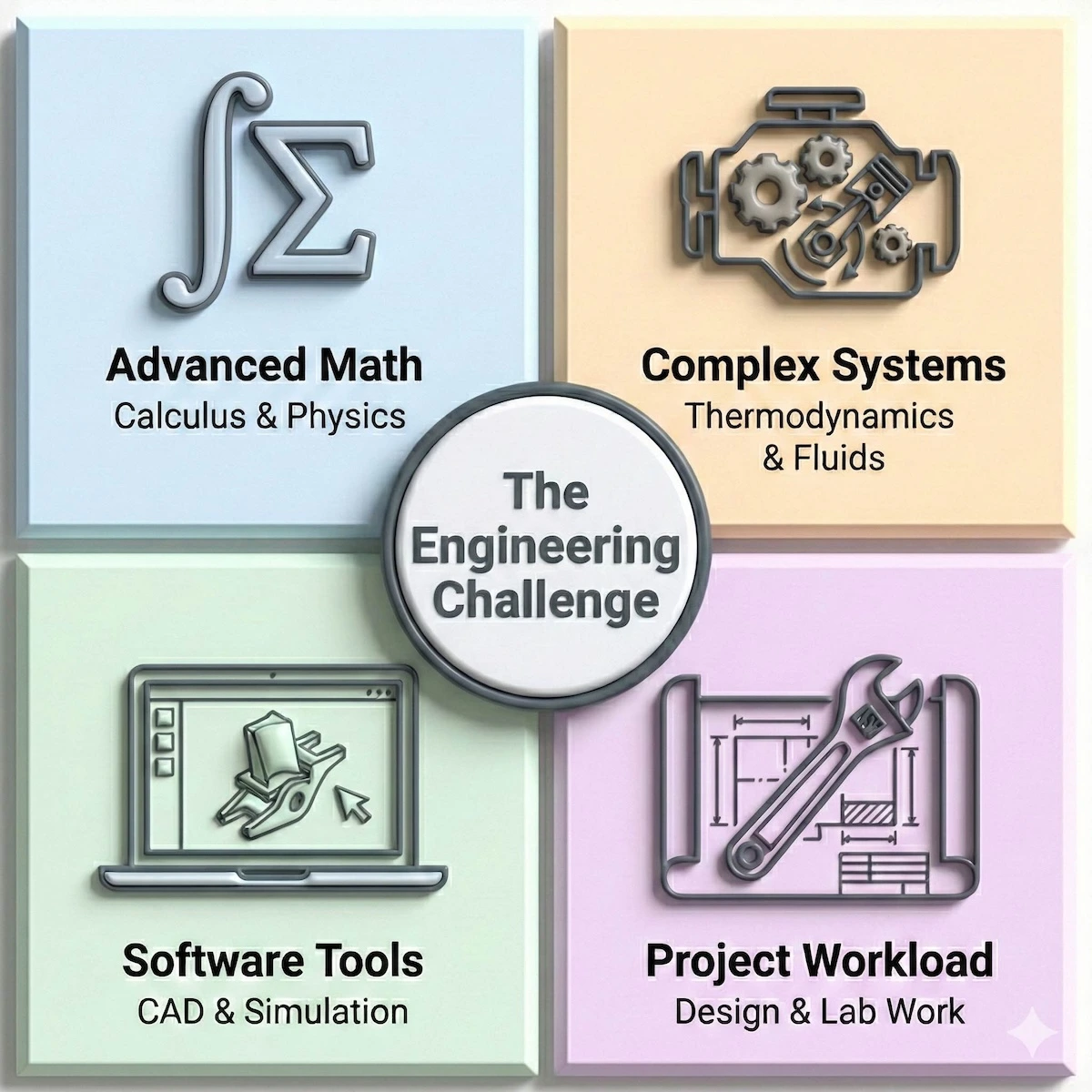
Mastering automotive engineering requires balancing advanced math, software skills, complex systems theory, and hands-on projects.
Recognizing these distinct hurdles is the first step toward overcoming them with targeted study plans.
How Tutoring Helps Automotive Engineering Students
Many students find that one-on-one tutoring makes a big difference. Consider a student working on a car engine project: a tutor can explain each step of the combustion cycle or sketch how pistons move, turning confusion into clear understanding. Tutors often use real-life examples (like actual car designs or lab demonstrations) to make abstract theory more tangible. This personalized approach complements classroom teaching.
How exactly does this differ from your regular university lectures? The comparison below outlines the key structural differences in your learning environment.
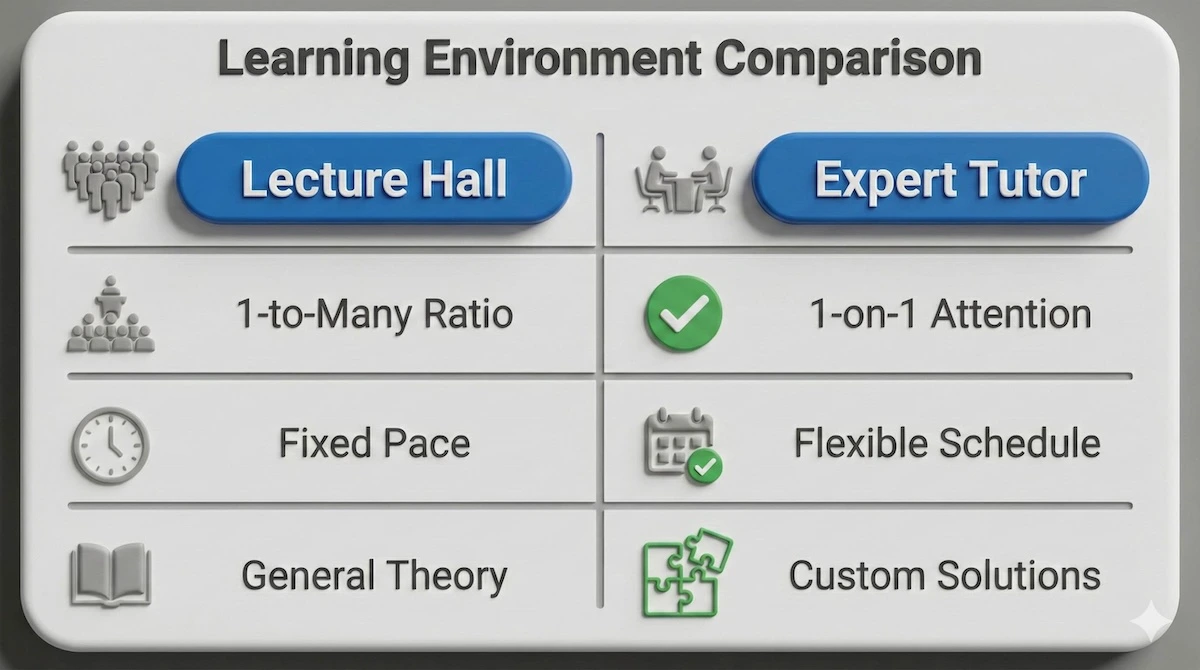
While lectures provide the theory, private tutoring offers the personalized attention and flexibility needed to master complex topics.
While lectures cover the syllabus, the personalized attention shown on the right is often what turns confusion into clarity.
- Individualized Attention: A tutor focuses on your specific needs. Unlike a crowded classroom, Online tutoring offers one-on-one sessions so students can ask questions until concepts are clear.
- Supplemental Resources: Tutors provide extra practice problems, study guides, and videos to reinforce learning. These materials help you practice tough topics covered in automotive engineering courses.
- Automotive Engineering Homework Help: Tutors guide you through challenging homework and assignments in automotive engineering, offering step-by-step solutions and feedback. This Automotive Engineering homework (hw) help ensures your calculations and designs are correct.
- Automotive Engineering Assignment Help: Whether it’s a project report or design prototype, tutors assist with planning and technical details. For example, they might help in preparing a report on engine efficiency or debugging a vehicle simulation.
- Confidence and Grades: By clearing doubts and building understanding, tutoring often leads to better grades and self-assurance. Studies note that tutoring programs improve student performance and confidence, helping students succeed on exams and projects.
- Problem-Solving Skills: Tutors don’t just give answers; they teach critical thinking and engineering problem-solving methods. These skills are essential for long-term success in automotive engineering.
Automotive Engineering Tutoring Online
Online tutoring has become a popular way to get help. With a computer and internet, students can connect to expert automotive tutors anywhere in the USA, UK, Gulf, etc. According to research, global online tutoring is growing quickly – a report values the market at over $8.3B in 2024 and projects it to reach $27.6B by 2034. This boom is fueled by convenience and technology: students can learn from home on flexible schedules, which is especially helpful for those in remote areas or with busy routines. Modern platforms offer video chat, interactive whiteboards, and screen sharing. For example, a tutor can draw engine diagrams live or walk you through CAD software in real time. These tools make online tutoring almost as effective as being in the same room.
You might wonder how engineering concepts can be taught effectively over the internet. Modern platforms utilize a specific ‘tech stack’ to replicate the lab environment.
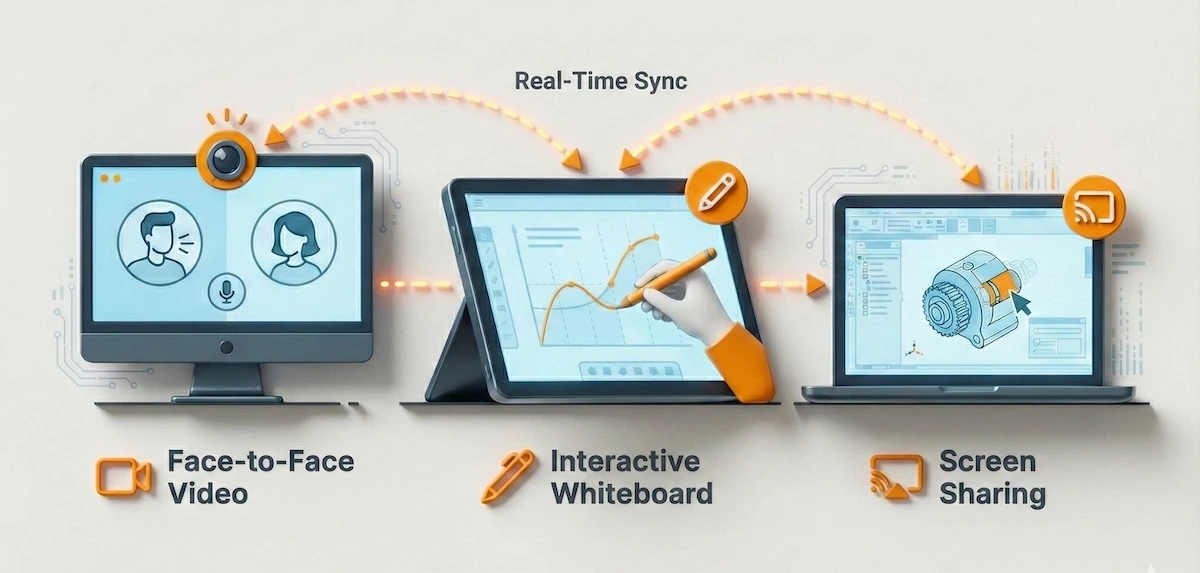
Modern online platforms use video, digital whiteboards, and screen sharing to create an interactive lab-like experience from home.
These three integrated tools ensure that complex diagrams and equations are communicated just as clearly as they would be on a physical chalkboard.
- Flexible Scheduling: Learn at times that suit you, even evenings or weekends. Online sessions eliminate travel time, making it easier to fit tutoring around school or extracurriculars.
- Global Expertise: Geography is no obstacle – a student in Dubai or London can be matched with a top engineering tutor from anywhere. This means access to specialized knowledge and different teaching styles.
- Interactive Tools: Online platforms include features like virtual whiteboards and shared screens. Tutors can highlight parts of a car schematic or annotate equations on the fly, which helps in understanding complex automotive concepts.
Finding and Hiring the Right Tutor
To benefit most from tutoring, find a tutor who is a good fit. Look for someone with a strong engineering background and good teaching skills. Many tutoring sites let you view profiles and reviews before you choose. When considering a tutor, ask about their qualifications and experience with automotive engineering. For example, a tutor with industry experience (perhaps someone who worked on car designs) can offer practical insights. It’s also helpful to take a short trial session (many services offer a low-cost trial) to see if the tutor’s style works for you. Make sure the tutor’s availability and rates fit your needs – for automotive engineering, tutoring rates often range from about $20 to $40 per hour, depending on the tutor’s expertise and the complexity of help needed.
Ready to find help but unsure where to start? Follow this simple five-step roadmap to hire the right professional without the stress.
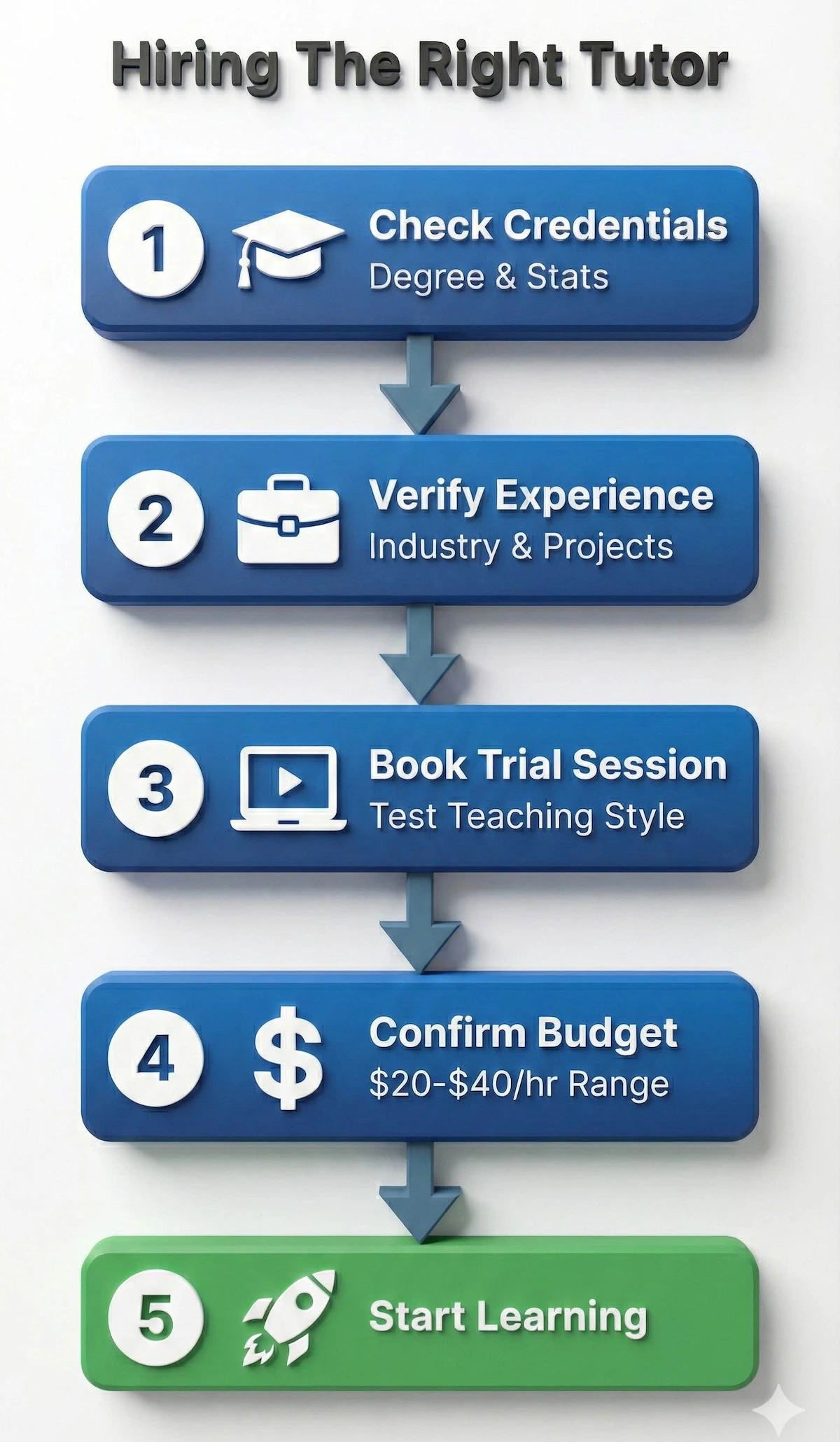
Follow this five-step process to ensure you find a qualified tutor who fits your academic needs and budget.
Sticking to this verification process ensures you don’t just get a tutor, but a mentor who fits your specific budget and academic goals.
- Check Credentials: Choose tutors with degrees or certifications in engineering or related fields. Some tutors may have professional experience in the automotive industry.
- Experience: A tutor who has worked as an engineer or done research can relate lessons to real projects. Ask if they’ve helped with similar coursework or design tasks.
- Trial Session: Many platforms (like MyEngineeringBuddy) offer a trial lesson for a small fee. Use this to ensure the tutor explains well and addresses your questions.
- Reviews: Read testimonials from other students. Positive feedback about clear explanations or success stories can guide your choice.
- Cost and Schedule: Confirm the hourly rate and that it fits your budget (often $20–$40/hr for specialized tutoring). Also, make sure the tutor’s available times align with your schedule.
FAQs
- What is automotive engineering tutoring? Individualized help from an expert to support learning in automotive engineering courses and topics.
- How does online automotive engineering tutoring work? Students connect with a tutor via video call and shared tools, getting real-time help with problems and concepts from anywhere.
- Who can benefit from automotive engineering tutoring? High school and college students (and even professionals) studying vehicle design, engines, or related subjects can benefit from targeted tutoring support.
- How is an automotive engineering tutor different from a teacher? A teacher delivers classroom instruction to many students, while a tutor offers one-on-one assistance focusing on the student’s individual needs.
- What does automotive engineering homework and assignment help include? It includes step-by-step guidance on homework problems, and support for projects or lab assignments so students complete work accurately and on time.
- How can I hire an automotive engineering tutor? You can hire an automotive engineering tutor online through educational platforms or services that connect you to qualified engineering tutors.
Related Subjects:
Automotive Electronics
Autonomous Vehicles
Electric and Hybrid Vehicle
MSC ADAMS
Powertrain Engineering
******************************
This article provides general educational guidance only. It is NOT official exam policy, professional academic advice, or guaranteed results. Always verify information with your school, official exam boards (College Board, Cambridge, IB), or qualified professionals before making decisions. Read Full Policies & Disclaimer , Contact Us To Report An Error