Hire Verified & Experienced
Earthquake engineering Tutors
4.8/5 40K+ session ratings collected on the MEB platform



Hire The Best Earthquake engineering Tutor
Top Tutors, Top Grades. Without The Stress!




52,000+ Happy Students From Various Universities






How Much For Private 1:1 Tutoring & Hw Help?
Private 1:1 Tutoring and HW help Cost $20 – 35 per hour* on average.
Most students don’t fail earthquake engineering because the maths is too hard. They fail because nobody ever showed them how seismic demand, structural response, and code provisions connect.
Earthquake Engineering Tutor Online
Earthquake engineering is a branch of civil and structural engineering that analyses how structures respond to seismic ground motion, applying codes such as ASCE 7, Eurocode 8, and IBC to design buildings, bridges, and infrastructure that resist earthquake forces.
If you’ve searched for an earthquake engineering tutor near me, MEB gives you something better — a verified specialist available online, matched to your course, exam board, or software environment. Our 1:1 online civil engineering tutoring covers the full spectrum from seismic hazard analysis through to performance-based design. One session can reframe a concept that three lectures left unclear.
- 1:1 online sessions tailored to your university course or professional syllabus
- Expert-verified tutors with structural dynamics and seismic design experience
- Flexible time zones — US, UK, Canada, Australia, Gulf
- Structured learning plan built after a diagnostic session
- Ethical homework and assignment guidance — you understand the work before you submit
“52,000+ students across the US, UK, Canada, Australia, and the Gulf have used MEB since 2008 — including students in Civil Engineering subjects like earthquake engineering, structural dynamics, and foundation design engineering.”
Source: My Engineering Buddy, 2008–2025.
How Much Does an Earthquake Engineering Tutor Cost?
Most earthquake engineering tutoring sessions run $20–$40/hr. Graduate-level or niche topics — performance-based design, nonlinear time-history analysis, advanced soil-structure interaction — reach up to $100/hr. Start with the $1 trial: 30 minutes of live 1:1 tutoring or one full homework question explained.
| Level / Need | Typical Rate | What’s Included |
|---|---|---|
| Undergraduate (most levels) | $20–$35/hr | 1:1 sessions, homework guidance |
| Graduate / Specialist | $35–$100/hr | Expert tutor, nonlinear analysis, code depth |
| $1 Trial | $1 flat | 30 min live session or 1 homework question |
Tutor availability tightens significantly around end-of-semester project deadlines and final exam periods. Book early if your submission date is within four weeks.
WhatsApp MEB for a quick quote — average response time under 1 minute.
Who This Earthquake Engineering Tutoring Is For
Earthquake engineering sits at the junction of seismology, structural mechanics, and building codes. Most students hit trouble not at the conceptual level but when they have to apply modal analysis, response spectra, or ASCE 7 load combinations to an actual design problem.
- Undergraduate civil and structural engineering students tackling their first seismic design course
- Graduate students working through nonlinear dynamic analysis or performance-based earthquake engineering (PBEE)
- Students retaking after a failed first attempt — particularly those who struggled with time-history analysis or ductility design
- Students with a university conditional offer depending on this grade
- Engineers preparing for the SE licensure exam (seismic component) in US states with high seismic risk
- Students using ETABS, SAP2000, or OpenSees for coursework projects with tight deadlines
- Parents watching a child’s confidence drop alongside their grades in a demanding structural elective
Students from universities across the US, UK, Canada, and Australia — including programmes at institutions such as UC Berkeley, Imperial College London, ETH Zurich, University of British Columbia, and UNSW Sydney — have used MEB for earthquake engineering support.
1:1 Tutoring vs Self-Study vs AI vs YouTube vs Online Courses
Self-study works if you’re disciplined, but earthquake engineering has too many interdependencies — miss one concept in modal superposition and everything downstream falls apart. AI tools explain individual equations quickly but can’t watch you set up a response spectrum incorrectly and catch it in real time. YouTube covers seismic concepts well at the survey level, then stops when you need to justify a ductility class selection under Eurocode 8. Online courses move at a fixed pace regardless of whether you’ve actually understood nonlinear pushover before the next module loads. 1:1 tutoring with MEB is live, calibrated to your exact course and software environment, and corrects errors the moment they form — which in earthquake engineering is the only time that correction actually sticks.
Outcomes: What You’ll Be Able To Do in Earthquake Engineering
After working with an MEB earthquake engineering tutor, you’ll be able to apply seismic hazard analysis to site-specific design parameters, model structural response using response spectrum and time-history methods, analyze a building’s ductility and energy dissipation capacity under lateral loads, explain the difference between force-based and displacement-based design philosophies, and present a code-compliant seismic design to ASCE 7, Eurocode 8, or your regional standard. These are not abstract skills — they translate directly to exam marks, project grades, and professional practice.
“Based on feedback from 40,000+ sessions collected by MEB from 2022 to 2025, 58% of students improved by one full grade after approximately 20 hours of 1:1 tutoring in subjects like earthquake engineering. A further 23% achieved at least a half-grade improvement.”
Source: MEB session feedback data, 2022–2025.
Supporting a student through earthquake engineering? MEB works directly with parents to set up sessions, track progress, and keep coursework on schedule. WhatsApp MEB — average response time is under a minute, 24/7.
What We Cover in Earthquake Engineering (Syllabus / Topics)

Seismic Hazard and Ground Motion
- Seismicity, fault types, and tectonic setting
- Ground motion characterisation — PGA, PGV, spectral acceleration
- Probabilistic seismic hazard analysis (PSHA)
- Site response analysis and soil amplification factors
- Design response spectra — elastic and inelastic
- Ground motion selection and scaling for time-history analysis
Core texts: Kramer, Geotechnical Earthquake Engineering; Chopra, Dynamics of Structures.
Structural Response and Seismic Analysis Methods
- Single- and multi-degree-of-freedom (SDOF/MDOF) systems
- Modal analysis and response spectrum method (RSM)
- Equivalent lateral force (ELF) procedure — ASCE 7 and Eurocode 8
- Linear and nonlinear time-history analysis
- Pushover analysis and capacity curves
- Soil-structure interaction (SSI) fundamentals
- Modelling in ETABS, SAP2000 tutoring, and OpenSees
Core texts: Chopra, Dynamics of Structures; Clough & Penzien, Dynamics of Structures.
Seismic Design of Structures and Performance-Based Engineering
- Ductility concepts — displacement ductility, overstrength, response modification factor (R)
- Seismic design of reinforced concrete frames — ACI 318, Eurocode 8
- Seismic design of steel moment frames and braced frames
- Base isolation systems and energy dissipation devices
- Performance-based earthquake engineering (PBEE) — FEMA P-58 framework
- Seismic retrofitting strategies for existing structures
Core texts: Elnashai & Di Sarno, Fundamentals of Earthquake Engineering; FEMA P-58 documentation.
At MEB, we’ve found that the students who struggle most with earthquake engineering aren’t weak in maths — they haven’t built a clear mental model of how seismic demand translates into structural response. Once that picture is in place, code application becomes much more straightforward.
What a Typical Earthquake Engineering Session Looks Like
The tutor opens by checking the previous topic — usually something specific, like whether the student can correctly define the ductility reduction factor R and explain why it differs between a special moment frame and an ordinary moment frame. From there, the session moves to the live problem: modal analysis of a multi-storey frame, or setting up a response spectrum in ETABS from ASCE 7 parameters. The tutor works through it on a digital pen-pad, writing out the steps exactly as they’d appear in an exam solution. The student then replicates the process or explains the reasoning step-by-step. By the close, one concrete task is set — typically a past paper question on ELF procedure or a short nonlinear pushover exercise — and the next topic is noted for the following session.
How MEB Tutors Help You with Earthquake Engineering (The Learning Loop)
Diagnose: In the first session, the tutor identifies exactly where understanding breaks down — whether it’s the conceptual link between spectral acceleration and structural period, confusion between Eurocode 8 and ASCE 7 terminology, or a gap in the underlying structural dynamics needed for modal analysis.
Explain: The tutor works through live examples on a digital pen-pad — deriving the response spectrum step by step, or walking through an ETABS modal analysis setup from seismic parameters to base shear output. Nothing is assumed; everything is shown.
Practice: The student attempts problems with the tutor present — setting up SDOF equations, applying the ELF procedure, or interpreting a pushover curve. Real exam-style questions, not textbook worked examples with the answer already visible.
Feedback: Every error gets a specific correction: why that approach loses marks, which code clause was misapplied, and what the correct reasoning chain looks like. No vague “try again” — precise, step-level feedback.
Plan: At the end of each session, the tutor notes the next topic, sets a practice task, and flags any prerequisite gaps — in structural analysis tutoring fundamentals or soil mechanics — that need closing before the next session.
All sessions run over Google Meet with a digital pen-pad or iPad + Apple Pencil. Before your first session, have your course syllabus, a recent assignment or past paper attempt, and your exam or project deadline ready. The tutor uses the first session as a diagnostic and builds the session sequence from there. Start with the $1 trial — 30 minutes of live tutoring that also serves as your first diagnostic.
Students consistently tell us that the moment earthquake engineering clicks is when they stop treating seismic codes as a checklist and start reading them as a record of what actually failed in past earthquakes. That shift in perspective changes everything about how they approach design problems.
Tutor Match Criteria (How We Pick Your Tutor)
Not every structural engineer is the right tutor for earthquake engineering. MEB matches on four criteria.
Subject depth: The tutor must have direct experience at your level — undergraduate seismic design, graduate nonlinear analysis, or professional SE exam preparation — and familiarity with your specific code environment (ASCE 7, Eurocode 8, NBC Canada, or AS 1170.4).
Tools: Sessions run on Google Meet with a digital pen-pad or iPad + Apple Pencil. Tutors working on software-based assignments must be proficient in ETABS, SAP2000, or OpenSees as required.
Time zone: Matched to your region — US, UK, Gulf, Canada, or Australia — so sessions fit your schedule without early-morning or late-night compromises.
Goals: Whether you need exam score improvement, conceptual depth in PBEE, homework completion support, or research-level guidance, the tutor is selected to match that specific target.
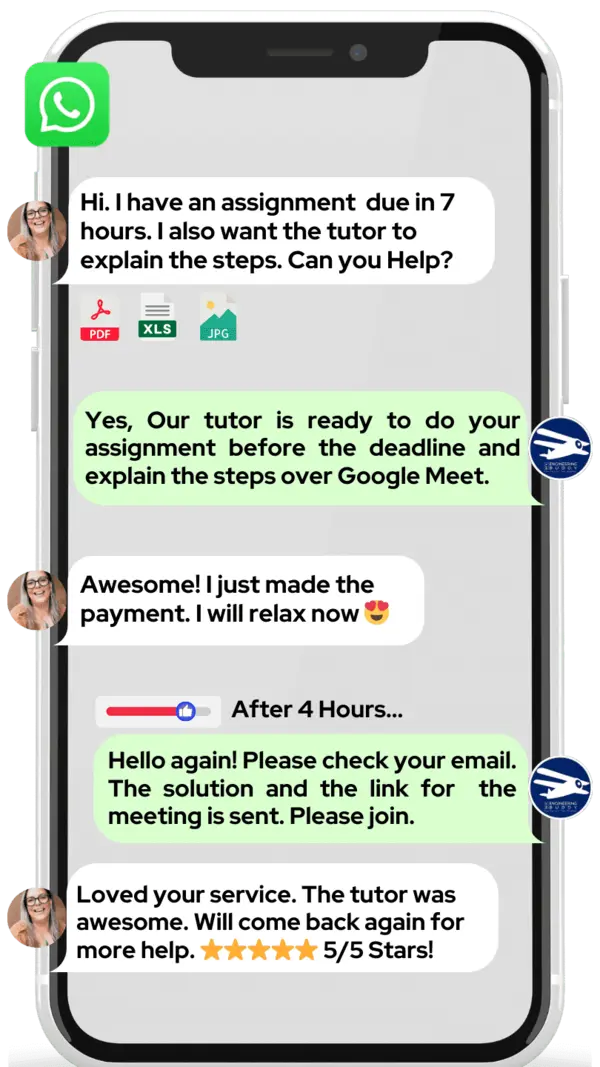
Unlike platforms where you fill out a form and wait, MEB responds in under a minute, 24/7. Tutor match takes under an hour. The $1 trial means you test before you commit. Everything runs over WhatsApp — no logins, no intake forms.
Study Plans (Pick One That Matches Your Goal)
Catch-up (1–3 weeks): for students behind on modal analysis, response spectra, or seismic design code application with an exam or submission approaching. Exam prep (4–8 weeks): structured revision covering all major exam topics — hazard analysis, structural response methods, and seismic design of RC and steel structures. Weekly support: ongoing sessions aligned to semester lectures and coursework deadlines, covering each topic as it’s taught. The tutor builds the specific sequence after the diagnostic — nothing is assumed, everything is checked.
Pricing Guide
Undergraduate earthquake engineering: $20–$40/hr. Graduate-level topics — nonlinear time-history analysis, PBEE, advanced soil-structure interaction, or OpenSees modelling — typically fall in the $40–$100/hr range. Rate factors include topic complexity, course level, timeline pressure, and tutor availability.
Peak demand hits hardest in April–May (US spring finals), November–December (UK/Australia semester end), and the weeks before SE exam windows. Availability is genuinely limited in those periods.
For students targeting top graduate programmes or professional SE licensure, tutors with research backgrounds in seismic design and performance-based engineering are available at higher rates — share your specific goal and MEB will match the tier to your ambition.
Start with the $1 trial — 30 minutes, no registration, no commitment. WhatsApp MEB for a quick quote.
Try your first session for $1 — 30 minutes of live 1:1 tutoring or one homework question explained in full. No registration. No commitment. WhatsApp MEB now and get matched within the hour.
FAQ
Is earthquake engineering hard?
It’s demanding. The subject requires solid foundations in structural mechanics, dynamics, and probability — and then asks you to apply all three through seismic codes simultaneously. Most students find the conceptual connections, not the maths itself, to be where sessions with an earthquake engineering tutor make the biggest difference.
How many sessions are needed?
For a specific exam topic like response spectrum method, two to three sessions usually get a student to a working level. Closing gaps across a full course — hazard analysis through seismic design — typically takes 10–20 hours spread over a semester or an intensive prep block.
Can you help with homework and assignments?
MEB tutoring is guided learning — you understand the work, then submit it yourself. If you’re stuck on a seismic base shear calculation or an ETABS modelling assignment, the tutor explains the method and reasoning. See our Academic Integrity policy and Why MEB page for full details on what we help with and what we don’t.
Will the tutor match my exact syllabus or exam board?
Yes. MEB tutors are matched to your specific course — whether that’s ASCE 7 at a US university, Eurocode 8 at a European or UK institution, NBC Canada seismic provisions, or AS 1170.4 in Australia. Share your course outline when you WhatsApp MEB and the match is made on that basis.
What happens in the first session?
The tutor runs a diagnostic — checking where your understanding currently sits, which topics from the syllabus are solid and which have gaps. From there, a session sequence is built. Nothing is assumed; the tutor starts from where you actually are, not where the course expects you to be.
Is online tutoring as effective as in-person?
For earthquake engineering specifically, online is often better. The tutor can share ETABS or SAP2000 screens, annotate response spectra in real time, and pull up ASCE 7 or Eurocode 8 clauses side by side with your problem. A physical whiteboard can’t do that.
What’s the difference between ASCE 7 and Eurocode 8, and does MEB cover both?
ASCE 7 (US) uses a risk-targeted maximum considered earthquake (MCER) framework with R factors for ductility. Eurocode 8 (EU/UK) uses behaviour factors (q) and a different hazard map structure. The design philosophy is similar; the terminology and load combinations differ. MEB tutors cover both — and can also support NBC Canada and AS 1170.4.
Can MEB help with ETABS or SAP2000 seismic modelling assignments?
Yes. Tutors proficient in ETABS tutoring and SAP2000 can walk through seismic load definition, modal analysis setup, response spectrum assignment, and interpretation of drift and base shear outputs. Share your model file or assignment brief via WhatsApp before the session.
Can I get earthquake engineering help at midnight?
Yes. MEB operates across time zones — US, UK, Gulf, Canada, Australia. WhatsApp is the fastest channel; the average response time is under one minute regardless of the hour. A tutor in the right time zone is matched to your availability, not the other way around.
What if I don’t like my assigned tutor?
Request a change via WhatsApp and MEB will rematch you — typically within the same day. The $1 trial is specifically designed so you can test fit before committing to a paid block of sessions. No awkward conversations, no locked-in contracts.
Do you offer group earthquake engineering sessions?
MEB’s model is 1:1 — that’s the point. Group sessions compromise the diagnostic precision that makes earthquake engineering tutoring work. If you and a study partner both need help, each gets a separate matched tutor at the same rate.
How do I get started?
Three steps: WhatsApp MEB, share your course and exam date, and start the $1 trial — 30 minutes of live tutoring or one full question explained. You’re matched within the hour. No registration, no forms, no waiting.
Trust & Quality at My Engineering Buddy
Every MEB tutor goes through subject-specific vetting — not a generic interview, but a live demo evaluation in earthquake engineering topics, checked against their academic background and practical experience. Tutors hold postgraduate degrees in civil or structural engineering and, where relevant, professional experience in seismic design. Ongoing feedback from each session feeds into a review process that pulls underperforming tutors before problems compound. Rated 4.8/5 across 40,000+ verified reviews on Google — that number is a direct consequence of how seriously the matching and vetting process is taken. Get structural engineering help or earthquake engineering tutoring from a tutor who has actually used the codes and tools your course requires.
MEB tutoring is guided learning — you understand the work, then submit it yourself. For full details on what we help with and what we don’t, read our Academic Integrity policy and Why MEB.
MEB has served 52,000+ students across the US, UK, Canada, Australia, the Gulf, and Europe in 2,800+ advanced subjects since 2008. Civil Engineering is one of MEB’s strongest subject families — covering earthquake engineering, geotechnical engineering tutoring, structural mechanics help, and dozens of related disciplines. The same rigour applied to seismic design is applied across every subject on the platform.
“MEB has operated since 2008 across 2,800+ subjects — with Civil Engineering tutoring covering earthquake engineering, blast-resistant design, and performance-based structural analysis at both undergraduate and postgraduate levels.”
Source: My Engineering Buddy, 2008–2025.
Explore Related Subjects
Students studying earthquake engineering often also need support in:
- Blast resistant design
- Wind engineering
- Composite materials structures
- Fracture mechanics
- Rock mechanics
- Slope stability analysis
- Soil mechanics
- Plaxis 2D 3D
A common pattern our tutors observe is that students who work through earthquake engineering systematically — hazard first, then structural response, then code application — retain the material well past the exam. Cramming seismic codes without that foundation rarely holds under timed conditions.
Next Steps
Before your first session, have ready:
- Your course syllabus or exam board (ASCE 7, Eurocode 8, NBC Canada, AS 1170.4)
- A recent past paper attempt or assignment you struggled with
- Your exam date or project submission deadline
Share your availability and time zone. MEB matches you with a verified earthquake engineering tutor — usually within 24 hours, often within the hour. The first session starts with a diagnostic so every minute counts from the start.
Visit www.myengineeringbuddy.com for more on how MEB works.
WhatsApp to get started or email meb@myengineeringbuddy.com.
Reviewed by Subject Expert
This page has been carefully reviewed and validated by our subject expert to ensure accuracy and relevance.