Hire Verified & Experienced
Environmental Chemistry Tutors
4.8/5 40K+ session ratings collected on the MEB platform
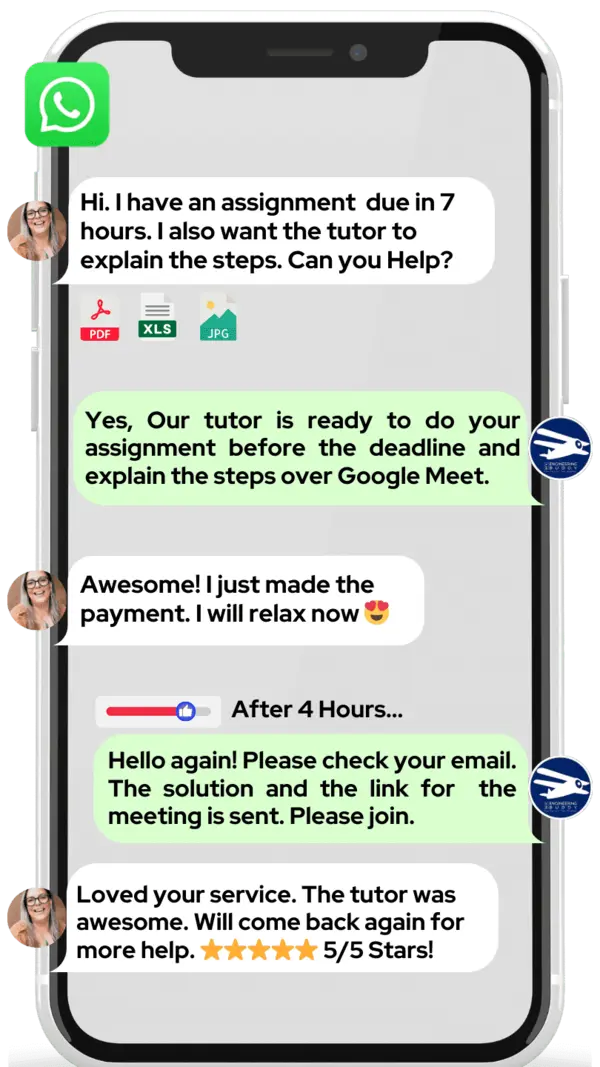



Hire The Best Environmental Chemistry Tutor
Top Tutors, Top Grades. Without The Stress!

52,000+ Happy Students From Various Universities




How Much For Private 1:1 Tutoring & Hw Help?
Private 1:1 Tutoring and HW help Cost $20 – 35 per hour* on average.
Struggling with atmospheric pollutants, water chemistry, or toxicology calculations? Most students hit a wall within the first three weeks of Environmental Chemistry — here’s why that happens and how to fix it.
Environmental Chemistry Tutor Online
Environmental Chemistry is the scientific study of chemical processes occurring in natural environments — air, water, and soil — including pollutant behaviour, biogeochemical cycles, and toxicological impacts on ecosystems and human health.
If you’ve searched for an Environmental Chemistry tutor near me, MEB offers 1:1 online tutoring and homework help across 2,800+ advanced subjects, including the full Chemistry curriculum. Our tutors cover everything from redox cycles in natural waters to atmospheric photochemistry — matched to your exact course, syllabus, and exam board. One outcome students consistently report: fewer dropped marks on calculation-heavy questions after working with a dedicated online Environmental Chemistry tutor.
- 1:1 online sessions tailored to your specific course and syllabus
- Expert-verified tutors with subject-specific Environmental Chemistry knowledge
- Flexible time zones — US, UK, Canada, Australia, Gulf
- Structured learning plan built after a diagnostic session
- Ethical homework and assignment guidance — you understand before you submit
52,000+ students across the US, UK, Canada, Australia, and the Gulf have used MEB since 2008 — including students in Chemistry subjects like Environmental Chemistry, Atmospheric Chemistry tutoring, and Analytical Chemistry help.
Source: My Engineering Buddy, 2008–2025.
How Much Does an Environmental Chemistry Tutor Cost?
Rates run $20–$40/hr for most undergraduate and A Level Environmental Chemistry courses. Graduate-level or highly specialised topics can reach $100/hr. The $1 trial gets you 30 minutes of live tutoring or one homework question explained in full — no registration required.
| Level / Need | Typical Rate | What’s Included |
|---|---|---|
| Standard (most levels) | $20–$35/hr | 1:1 sessions, homework guidance |
| Advanced / Specialist | $35–$70/hr | Expert tutor, niche depth |
| Graduate / Research | Up to $100/hr | PhD-level support, thesis work |
| $1 Trial | $1 flat | 30 min live session or 1 HW question |
Availability tightens significantly in April–May (AP and A Level exam season) and November–December. Book early if your deadline falls in those windows.
WhatsApp MEB for a quick quote — average response time under 1 minute.
Who This Environmental Chemistry Tutoring Is For
Environmental Chemistry draws on physical chemistry, toxicology, and earth sciences simultaneously. Students who struggle aren’t always weak in chemistry — they’re often unprepared for how much cross-disciplinary thinking the subject demands.
- Undergraduate students hitting the quantitative chemistry sections after a largely descriptive first year
- Students with a university conditional offer that depends on this grade
- Students 4–6 weeks from an exam with gaps in atmospheric chemistry or water treatment calculations still to close
- Graduate students needing support with environmental fate modelling or exposure assessment
- Parents watching a child’s confidence drop alongside their grades in a course that seemed manageable at the start
- Students needing homework and assignment guidance through complex lab reports or case studies
Students at institutions including the University of Toronto, University of Edinburgh, UC Davis, University of Melbourne, and ETH Zürich have worked with MEB tutors on Environmental Chemistry coursework.
1:1 Tutoring vs Self-Study vs AI vs YouTube vs Online Courses
Self-study works if you’re disciplined — but Environmental Chemistry has enough interconnected frameworks that gaps compound fast. AI tools give quick definitions but can’t walk you through a fate-and-transport calculation in real time or spot where your unit analysis breaks down. YouTube is useful for conceptual overviews of the nitrogen cycle or ozone depletion; it stops there. Online courses move at a fixed pace regardless of where you’re stuck. With a 1:1 Environmental Chemistry tutor online from MEB, sessions are calibrated to your exact syllabus — whether that’s ATSDR toxicology frameworks, Henry’s Law applications, or speciation modelling in aquatic systems.
Outcomes: What You’ll Be Able To Do in Environmental Chemistry
After working with a private Environmental Chemistry tutor, students consistently report clearer control over the topics that cost the most marks. Solve atmospheric chemistry problems involving photolysis rate constants and secondary pollutant formation. Analyze water quality data using equilibrium speciation models and interpret results in a regulatory context. Apply fate-and-transport equations to predict contaminant behaviour in soil and groundwater systems. Explain biogeochemical cycles — nitrogen, phosphorus, carbon — at a mechanistic level, not just descriptively. Write lab reports that correctly attribute sources of error and connect observations to underlying chemical principles.
Supporting a student through Environmental Chemistry? MEB works directly with parents to set up sessions, track progress, and keep coursework on schedule. WhatsApp MEB — average response time is under a minute, 24/7.
Based on feedback from 40,000+ sessions collected by MEB from 2022 to 2025, 58% of students improved by one full grade after approximately 20 hours of 1:1 tutoring in subjects like Environmental Chemistry. A further 23% achieved at least a half-grade improvement.
Source: MEB session feedback data, 2022–2025.
Students consistently tell us that the first session in Environmental Chemistry is almost always the same: they thought they understood the concept but couldn’t execute the calculation. That gap — between recognition and application — is exactly what structured 1:1 work closes fastest.
What We Cover in Environmental Chemistry (Syllabus / Topics)

Atmospheric Chemistry and Air Quality
- Tropospheric and stratospheric chemistry — ozone formation and depletion
- Photochemical smog: VOC and NOx reactions, secondary pollutant formation
- Greenhouse gases — sources, sinks, radiative forcing calculations
- Acid rain chemistry — SO₂ and NOₓ oxidation pathways
- Particulate matter: composition, size fractions, and health exposure metrics
- Henry’s Law and gas-liquid partitioning in atmospheric systems
Core texts: Seinfeld & Pandis Atmospheric Chemistry and Physics; Finlayson-Pitts & Pitts Chemistry of the Upper and Lower Atmosphere.
Aquatic and Soil Chemistry
- Carbonate equilibria and pH buffering in natural waters
- Redox chemistry in aquatic environments — Eh-pH diagrams
- Heavy metal speciation and mobility in soil and sediment
- Nutrient cycling: nitrogen and phosphorus loading, eutrophication
- Sorption, partitioning, and bioavailability of organic contaminants
- Water treatment chemistry — coagulation, disinfection by-products
- Fate and transport of contaminants in groundwater systems
Core texts: Stumm & Morgan Aquatic Chemistry; Sparks Environmental Soil Chemistry; Manahan Environmental Chemistry.
Toxicology, Fate Modelling, and Regulatory Frameworks
- Dose-response relationships — NOAEL, LOAEL, risk characterisation
- Bioaccumulation and biomagnification — Kow-based models
- Environmental fate modelling: fugacity models, Level I–III
- Persistent organic pollutants — PCBs, dioxins, PFAS chemistry
- Regulatory standards: EPA, EU environmental directives, REACH
- Green chemistry principles and pollution prevention design
Core texts: Newman Fundamentals of Ecotoxicology; Mackay Multimedia Environmental Models. The College Board AP Chemistry framework provides useful context for students bridging from AP into Environmental Chemistry coursework.
What a Typical Environmental Chemistry Session Looks Like
The tutor opens by checking where you left off — usually the previous session’s topic, which might have been carbonate equilibrium calculations or a fate-and-transport problem set. From there, the session moves to whatever is causing the most friction right now. If it’s Eh-pH diagrams, the tutor draws one live using a digital pen-pad while explaining how redox potential and pH together determine metal speciation in a waterway. You then attempt a parallel problem. The tutor watches your method in real time, steps in when your Nernst equation application goes wrong, and explains exactly which step lost the mark — not just what the right answer is. The session closes with two or three practice problems assigned for before next time, and the next topic flagged so you can glance at it in advance. Get physical chemistry tutoring if you find that thermodynamic foundations are slowing you down in these sessions.
How MEB Tutors Help You with Environmental Chemistry (The Learning Loop)
Diagnose: In the first session, the tutor works through a short set of problems with you to locate the real gaps. For most Environmental Chemistry students, it’s not the concepts — it’s unit analysis in multi-step calculations, or conflating equilibrium constants across different system types.
Explain: The tutor works problems live on screen using a digital pen-pad or iPad with Apple Pencil. You see every step annotated in real time. This is different from a recorded lecture — the explanation responds to your specific confusion, not a general audience.
Practice: You attempt the next problem while the tutor watches. No skipping ahead. No “try it at home and see how it goes.” The attempt happens in the session, while support is available.
Feedback: Errors are corrected step by step. The tutor explains not just the right method but why the wrong step loses marks — which matters more in Environmental Chemistry, where partial credit often hinges on showing correct reasoning in fate calculations or toxicological risk assessment write-ups.
Plan: Each session ends with a clear next topic and a small practice task. If you have a lab report or assignment due, that shapes what gets prioritised. The tutor keeps track across sessions — you’re not starting from scratch each time.
Sessions run over Google Meet. Share your syllabus, a recent past paper, or the homework you’re stuck on before the first session — the tutor reviews it in advance so the first session covers real ground immediately. Whether you need a quick catch-up before an exam, structured revision over 4–8 weeks, or ongoing weekly support through the semester, the tutor maps the session plan after the first diagnostic. Start with the $1 trial — 30 minutes of live tutoring that also serves as your first diagnostic.
Try your first session for $1 — 30 minutes of live 1:1 tutoring or one homework question explained in full. No registration. No commitment. WhatsApp MEB now and get matched within the hour.
Tutor Match Criteria (How We Pick Your Tutor)
Not every chemist is equipped for Environmental Chemistry — it’s a cross-disciplinary subject, and a tutor who only knows organic synthesis won’t get far with aquatic speciation or toxicological risk models.
Subject depth: Tutors are vetted specifically on Environmental Chemistry, including the sub-disciplines relevant to your course — atmospheric, aquatic, toxicology, or regulatory frameworks. Tools: All sessions use Google Meet with a digital pen-pad or iPad and Apple Pencil for worked solutions. Time zone: Matched to your region — US, UK, Gulf, Canada, or Australia. Goals: Whether you need exam score improvement, help with lab reports and assignments, or conceptual depth for research work, the match accounts for it.
Unlike platforms where you fill out a form and wait, MEB responds in under a minute, 24/7. Tutor match takes under an hour. The $1 trial means you test before you commit. Everything runs over WhatsApp — no logins, no intake forms. Need inorganic chemistry tutoring or general chemistry help alongside your Environmental Chemistry sessions? MEB can run those in parallel.
MEB tutors cover Environmental Chemistry at undergraduate, graduate, and professional levels — matching your exam board, course structure, and the exact topics causing the most friction right now.
Source: My Engineering Buddy, 2008–2025.
Study Plans (Pick One That Matches Your Goal)
The tutor builds a specific sequence after the diagnostic, but most Environmental Chemistry students fall into one of three patterns. Catch-up (1–3 weeks): behind on a specific topic cluster — atmospheric chemistry or aquatic equilibria — with an exam or submission approaching. Exam prep (4–8 weeks): structured topic-by-topic revision with past paper practice integrated throughout. Weekly support: ongoing sessions aligned to your lecture schedule and assignment deadlines, so nothing piles up. Share your timeline and the tutor maps the plan.
Pricing Guide
Most Environmental Chemistry tutoring runs $20–$40/hr. Graduate-level coursework, thesis support, or highly specialised topics such as fugacity modelling or PFAS environmental fate can reach $100/hr. Rate factors include your level, the complexity of the topic, your timeline, and tutor availability.
Availability is tightest in April–May and in the November semester-end window. If your exam or submission falls then, booking even two weeks early makes a difference.
For students targeting competitive graduate programmes or research positions in environmental science or regulatory toxicology, tutors with professional or research backgrounds in those fields are available at higher rates — share your specific goal and MEB will match the tier to your ambition.
Start with the $1 trial — 30 minutes, no registration, no commitment. WhatsApp MEB for a quick quote.
A common pattern our tutors observe is that Environmental Chemistry students spend revision time re-reading notes on concepts they already understand, while the calculation-based questions — the ones that actually lose the marks — don’t get enough practice time. We redirect that early.
FAQ
Is Environmental Chemistry hard?
It’s demanding because it combines physical chemistry, biology, earth science, and regulatory knowledge in one course. Students who’ve handled general chemistry reasonably well often find the multi-system equilibrium problems and fate modelling calculations the steepest part of the jump.
How many sessions are needed?
Most students see clear improvement in targeted topics within 4–6 sessions. Closing broader gaps across atmospheric, aquatic, and toxicology sections typically takes 10–20 sessions, depending on starting level and how much independent practice happens between meetings.
Can you help with homework and assignments?
MEB tutoring is guided learning — you understand the work, then submit it yourself. Tutors walk through problem-solving methods, explain where your approach breaks down, and help you build the reasoning needed for lab reports and written assignments. See our Academic Integrity policy and Why MEB page for full details on what we help with and what we don’t.
Will the tutor match my exact syllabus or exam board?
Yes. Before the first session, share your course outline or exam board (AQA, OCR, Edexcel, specific university syllabus, or AP). The tutor reviews it and prioritises the components that carry the most weight in your assessment structure.
What happens in the first session?
The tutor runs a short diagnostic — a few problems across different topic areas — to find where the real gaps are. From that point, the rest of the session and all future sessions are targeted. Nothing generic. No re-covering ground you already know.
Is online tutoring as effective as in-person?
For a calculation-heavy subject like Environmental Chemistry, the digital pen-pad setup is as effective as a whiteboard — sometimes better, because the tutor can annotate directly on your problem attempt. The session record is also available to review after.
Does Environmental Chemistry require strong maths skills?
Yes — more than most students expect. Fate-and-transport calculations, equilibrium speciation, and dose-response modelling all require comfort with logarithms, differential equations at a basic level, and unit conversions. The tutor assesses your maths alongside your chemistry from the first session.
What’s the difference between Environmental Chemistry and Environmental Science?
Environmental Science is broader and more interdisciplinary — it includes ecology, policy, and geography. Environmental Chemistry focuses specifically on the chemical processes in air, water, and soil systems. The tutoring MEB provides is chemistry-first: equations, mechanisms, and quantitative analysis, not general science survey content.
Can you help with PFAS, microplastics, or emerging contaminant topics?
Yes. Tutors cover emerging contaminants including PFAS chemistry, microplastic fate and transport, and endocrine disruptor mechanisms. These topics appear increasingly in undergraduate and graduate courses and in regulatory frameworks — tutors stay current with them. Need support on organic chemistry tutoring that underpins contaminant structures? That’s covered too.
Can I get Environmental Chemistry help at short notice or late at night?
MEB operates 24/7 via WhatsApp. Tutors are available across multiple time zones, so late-night help before a morning submission or weekend exam prep session is standard practice, not a special request.
How do I get started?
Three steps: WhatsApp MEB, get matched with a verified Environmental Chemistry tutor — usually within the hour — and start your $1 trial session. Bring your syllabus, the topic you’re stuck on, and your exam or submission date. The tutor handles everything from there.
Trust & Quality at My Engineering Buddy
Every MEB tutor goes through subject-specific vetting — not a generic chemistry screen, but evaluation on the exact sub-disciplines they’ll teach. For Environmental Chemistry, that means demonstrated competence in aquatic chemistry, atmospheric systems, and toxicology, not just general chemistry. Candidates complete a live demo session before being added to the platform, and ongoing performance is tracked through session feedback. Rated 4.8/5 across 40,000+ verified reviews on Google. Need broader thermochemistry help or chemical kinetics tutoring as part of your Environmental Chemistry foundation work? Tutors cover those too.
MEB tutoring is guided learning — you understand the work, then submit it yourself. For full details on what we help with and what we don’t, read our Academic Integrity policy and Why MEB.
MEB has served 52,000+ students across the US, UK, Canada, Australia, Gulf, and Europe since 2008, covering 2,800+ subjects. Chemistry is one of MEB’s strongest subject families — from computational chemistry tutoring to chromatography help, the tutor network covers the full depth of the discipline.
MEB has operated since 2008 — 18 years of subject-specific tutor vetting, session feedback loops, and a 4.8/5 rating earned across 40,000+ student reviews. That’s the record behind every tutor match.
Source: My Engineering Buddy, 2008–2025.
At MEB, we’ve found that students who share their syllabus and a recent assignment before the first session make better use of every hour from day one. It takes two minutes to send — and it means the tutor arrives prepared, not spending half the session figuring out where you are.
Explore Related Subjects
Students studying Environmental Chemistry often also need support in:
- Chemical Equilibrium
- Stoichiometry
- Chemical Bonding
- Photochemistry
- Surface Chemistry
- Mass Spectrometry
- Industrial Chemistry
Next Steps
Ready to work with a verified Environmental Chemistry tutor online? Here’s what to do:
- Share your exam board, course level, and the topic areas causing the most friction
- Share your availability and time zone
- MEB matches you with a verified tutor — usually within 24 hours, often within the hour
- Your first session starts with a diagnostic so every minute of subsequent sessions is used well
Before your first session, have ready: your exam board and syllabus (or course outline), a recent past paper attempt or homework you struggled with, and your exam or deadline date. The tutor handles the rest.
Visit www.myengineeringbuddy.com for more on how MEB works.
WhatsApp to get started or email meb@myengineeringbuddy.com.
Reviewed by Subject Expert
This page has been carefully reviewed and validated by our subject expert to ensure accuracy and relevance.