Hire Verified & Experienced
Health Informatics Tutors
4.8/5 40K+ session ratings collected on the MEB platform
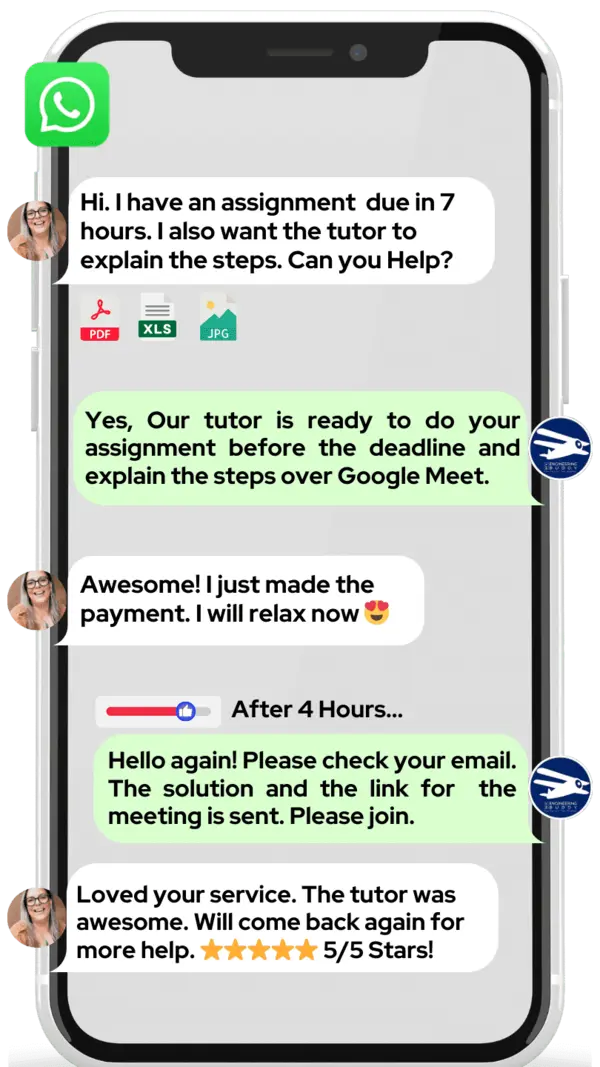



Hire The Best Health Informatics Tutor
Top Tutors, Top Grades. Without The Stress!
52,000+ Happy Students From Various Universities



How Much For Private 1:1 Tutoring & Hw Help?
Private 1:1 Tutoring and HW help Cost $20 – 35 per hour* on average.
Most students don’t fail Health Informatics because the content is impossible — they fail because EHR workflows, HL7 standards, and clinical data governance hit at once.
Health Informatics Tutor Online
Health Informatics is the applied discipline of managing, analysing, and exchanging clinical and population health data using information systems, standards such as HL7 and FHIR, and electronic health record platforms — equipping students to bridge healthcare delivery and data technology.
If you’ve been searching for a Health Informatics tutor near me, MEB’s 1:1 online tutoring and homework help in 2800+ advanced subjects connects you with a verified expert tutor — fast. Our Computer Science and Health Informatics specialists work directly on your course content: whether that’s FHIR implementation, database design for clinical systems, or interoperability frameworks. You understand the material, you submit the work, and your grade moves.
- 1:1 online sessions tailored to your exact course and syllabus
- Expert verified tutors with subject-specific Health Informatics knowledge
- Flexible time zones — US, UK, Canada, Australia, Gulf
- Structured learning plan built after a diagnostic session
- Ethical homework and assignment guidance — you understand before you submit
52,000+ students across the US, UK, Canada, Australia, and the Gulf have used MEB since 2008 — including students in Computer Science subjects like Health Informatics, Information Systems tutoring, and Database Design help.
Source: My Engineering Buddy, 2008–2025.
How Much Does a Health Informatics Tutor Cost?
Most Health Informatics sessions run $20–$40/hr. Specialist tutors covering graduate-level clinical data governance, FHIR API development, or graduate research support go up to $100/hr. Not sure where you fit? Start with the $1 trial — 30 minutes live or one homework question fully explained.
| Level / Need | Typical Rate | What’s Included |
|---|---|---|
| Undergraduate (most levels) | $20–$35/hr | 1:1 sessions, homework guidance |
| Graduate / Specialist | $35–$100/hr | Expert tutor, clinical systems depth |
| $1 Trial | $1 flat | 30 min live session or 1 homework question |
Tutor availability tightens significantly around semester end and project submission deadlines. Book early if your deadline is within three weeks.
WhatsApp MEB for a quick quote — average response time under 1 minute.
Who This Health Informatics Tutoring Is For
Health Informatics sits at the edge of two demanding fields — clinical medicine and software systems — and most programmes expect you to be competent in both from day one. That gap is where students struggle.
- Undergraduate students tackling EHR system design or clinical data standards for the first time
- Graduate students working through FHIR-based interoperability assignments or capstone projects
- Students retaking after a failed first attempt at a Health Informatics module
- Students with a university conditional offer depending on this grade
- Parents watching a student’s confidence fall as the technical content stacks up
- Students 4–6 weeks from submission with significant gaps in database management systems or systems architecture still to close
Students at universities including Johns Hopkins, University of Michigan, University of Edinburgh, University of Toronto, University of Melbourne, UNSW Sydney, and George Mason regularly come to MEB when Health Informatics coursework becomes unmanageable.
At MEB, we’ve found that Health Informatics students hit a wall specifically when clinical workflows and data standards collide in the same assignment. One session spent untangling what HL7 v2 is actually doing — versus what FHIR replaces — saves hours of misdirected revision. That’s the kind of clarification a tutor gets to in fifteen minutes.
1:1 Tutoring vs Self-Study vs AI vs YouTube vs Online Courses
Self-study works if you’re disciplined — but Health Informatics spans clinical knowledge, coding standards, and regulatory frameworks simultaneously, and no textbook tells you which gap is actually costing you marks. AI tools give fast explanations but can’t trace where your reasoning broke down on a specific FHIR resource design. YouTube covers EHR overviews well and stops the moment you’re stuck on a HL7 message segment. Online courses are structured but fixed-pace, with no one to catch your specific misconceptions. 1:1 tutoring with MEB is live, calibrated to your exact module, and corrects errors in the moment — including the ones you didn’t know you were making.
Outcomes: What You’ll Be Able To Do in Health Informatics
After focused 1:1 sessions, you’ll be able to analyse clinical data flows and identify where interoperability breaks down, apply HL7 FHIR standards to design compliant health data exchanges, explain the governance and privacy requirements under frameworks like HIPAA and GDPR as they apply to electronic health records, model a clinical database schema that supports real-world query workloads, and present a defensible data quality audit for a patient dataset. Every outcome targets the exact components your programme assesses.
Based on feedback from 40,000+ sessions collected by MEB from 2022 to 2025, 58% of students improved by one full grade after approximately 20 hours of 1:1 tutoring in subjects like Health Informatics. A further 23% achieved at least a half-grade improvement.
Source: MEB session feedback data, 2022–2025.
Try your first session for $1 — 30 minutes of live 1:1 tutoring or one homework question explained in full. No registration. No commitment. WhatsApp MEB now and get matched within the hour.
What We Cover in Health Informatics (Syllabus / Topics)

Clinical Data Standards and Interoperability
- HL7 v2 and v3 message structures — segments, fields, encoding rules
- FHIR (Fast Healthcare Interoperability Resources) — resources, RESTful APIs, profiles
- SNOMED CT, LOINC, and ICD coding systems
- CDA (Clinical Document Architecture) and structured document exchange
- Interoperability frameworks — national and international implementation guides
- Health data exchange architectures: point-to-point vs hub-and-spoke vs federated
Core texts include Shortliffe & Cimino’s Biomedical Informatics and Benson & Grieve’s Principles of Health Interoperability.
Electronic Health Records and Clinical Systems
- EHR system design — functional requirements, data models, user roles
- Clinical decision support systems (CDSS) — rule engines, alert logic
- Patient data governance — access control, audit trails, consent management
- HIPAA, GDPR, and regional privacy regulations as applied to health data
- Usability and human factors in clinical software — error reduction by design
- Meaningful Use and regulatory compliance frameworks
- Get dedicated help with Human-Computer Interaction tutoring for clinical UI design
Recommended reading: Hoyt & Yoshihashi’s Health Informatics: Practical Guide and Wager, Lee & Glaser’s Health Care Information Systems.
Health Data Analytics and Database Systems
- Relational database design for clinical data — normalisation, schema design
- SQL querying for patient datasets — aggregation, joins, temporal data
- Data warehousing in healthcare — star schemas, ETL pipelines for clinical data
- Population health analytics — cohort identification, risk stratification
- Machine learning applications in health informatics — predictive modelling basics
- Data quality assessment — completeness, accuracy, consistency in EHR data
- Students needing support with query logic can also access relational database help
Key references: Shortliffe & Cimino’s Biomedical Informatics (analytics chapters) and Stausberg et al. on secondary use of routine health data.
What a Typical Health Informatics Session Looks Like
The tutor opens by checking where you landed on the previous topic — say, designing a FHIR Patient resource with the correct identifier types and reference structures. If that clicked, you move to the next layer: building a RESTful query that retrieves and filters records by condition code. The tutor works through an example on screen with a digital pen-pad, marking up the FHIR JSON response and showing exactly where a malformed reference breaks the chain. You then replicate the query on your own dataset while the tutor watches and corrects in real time. The session closes with a specific task — map a clinical workflow to the corresponding FHIR resource types — and the next topic is noted: HL7 v2 ADT message parsing.
How MEB Tutors Help You with Health Informatics (The Learning Loop)
Diagnose: In the first session, the tutor works through two or three problems with you — not to test you, but to find where your reasoning breaks. In Health Informatics, that’s often the boundary between clinical logic and technical implementation: students know what an EHR does but can’t specify what the data model behind it requires.
Explain: The tutor then works live examples using a digital pen-pad — annotating a FHIR resource bundle, tracing a HL7 message segment by segment, or walking through a normalised clinical schema. You see the reasoning, not just the answer.
Practice: You attempt the next problem while the tutor is present. This is where most of the learning happens — not in the explanation, but in the attempt with immediate correction available.
Feedback: The tutor identifies exactly where marks are lost and why — whether it’s misapplying a coding standard, writing a query that returns the wrong patient cohort, or misidentifying a governance requirement in a case study question.
Plan: Each session ends with a clear next step. The tutor tracks topic progression and adjusts the plan if a concept takes longer than expected. No session is filler.
Sessions run over Google Meet. The tutor uses a digital pen-pad or iPad with Apple Pencil. Before your first session, share your course outline or module handbook, a recent assignment or past paper attempt, and your submission or exam date. That’s everything the tutor needs. Start with the $1 trial — 30 minutes of live tutoring that also serves as your first diagnostic.
Students consistently tell us that the shift happens when someone finally shows them the connection between the clinical side and the technical side in the same session. Health Informatics isn’t two subjects bolted together — it’s one discipline, and a good tutor treats it that way from the first hour.
Tutor Match Criteria (How We Pick Your Tutor)
Not every tutor who knows databases knows clinical data governance. MEB matches on four criteria.
Subject depth: The tutor must have specific Health Informatics knowledge — not just general IT or general biomedical science. We look for tutors with graduate-level coursework or professional experience in clinical informatics, EHR implementation, or health data systems.
Tools: Every tutor works over Google Meet with a digital pen-pad or iPad and Apple Pencil — you see working, not just answers.
Time zone: Matched to your region — US, UK, Gulf, Canada, Australia — so sessions start on time and late-night options are real, not theoretical.
Goals: Whether you need to pass an end-of-semester exam, complete a FHIR implementation project, or get ongoing support through a research-heavy programme, the tutor is matched to that specific goal — not just the subject name.
Unlike platforms where you fill out a form and wait, MEB responds in under a minute, 24/7. Tutor match takes under an hour. The $1 trial means you test before you commit. Everything runs over WhatsApp — no logins, no intake forms.
Study Plans (Pick One That Matches Your Goal)
After the diagnostic session, your tutor builds the sequence. Three common plans: Catch-up (1–3 weeks) — for students behind on a specific module, covering the highest-yield gaps first. Exam or submission prep (4–8 weeks) — structured revision across all assessable topics, with past paper practice built in. Weekly ongoing support — aligned to your semester schedule, covering new content as it’s taught and addressing homework questions as they arise. The tutor adjusts the plan as you progress.
Pricing Guide
Health Informatics tutoring runs $20–$40/hr for most undergraduate modules. Graduate-level work — clinical NLP, FHIR API implementation, health data warehouse projects — goes up to $100/hr. Rate factors: level of study, topic complexity, your timeline, and tutor availability in your time zone.
Availability drops sharply in the four weeks before semester end. If your deadline is close, don’t wait.
For students targeting roles in NHS Digital, US federal health agencies, or graduate programmes at research-intensive universities, tutors with professional clinical informatics backgrounds are available at higher rates — share your specific goal and MEB will match the tier to your ambition.
Start with the $1 trial — 30 minutes, no registration, no commitment. WhatsApp MEB for a quick quote.
FAQ
Is Health Informatics hard?
It’s demanding because it spans two fields at once: clinical healthcare knowledge and technical systems design. Students with a strong IT background struggle with clinical workflows. Students from healthcare backgrounds struggle with data modelling and coding standards. Most need support bridging that gap.
How many sessions are needed?
Students closing a specific gap — one module, one assignment — typically need 3–6 sessions. Students preparing across a full semester’s content usually work over 10–20 hours of 1:1 tutoring. The diagnostic session clarifies this quickly. There’s no fixed minimum.
Can you help with homework and assignments?
MEB tutoring is guided learning — you understand the work, then submit it yourself. See our Academic Integrity policy and Why MEB page for full details on what we help with and what we don’t. Tutors explain, demonstrate, and check your reasoning — they don’t produce work on your behalf.
Will the tutor match my exact syllabus or exam board?
Yes. Share your module handbook or course outline when you contact MEB. Tutors are matched to your specific programme — not just to a generic Health Informatics topic list. If your programme uses a particular EHR platform or coding standard, that’s factored into the match.
What happens in the first session?
The tutor runs a short diagnostic — working through a problem or past paper question with you to identify where reasoning breaks down. From there, the session focuses on the highest-priority gap. You leave with a clear next step and a topic plan for following sessions.
Is online tutoring as effective as in-person?
For Health Informatics, often more so. Screen sharing, digital annotation, and live system walkthroughs are easier online than in a room with a whiteboard. Tutors share their screen to walk through FHIR resources, HL7 messages, or database schemas in real time. The pen-pad replicates the whiteboard completely.
Can I get Health Informatics help at midnight?
Yes. MEB operates 24/7 across time zones. WhatsApp MEB at any hour — average response time is under a minute. Tutors are available across US, UK, Gulf, Canada, and Australia time zones, so late-night sessions before a submission deadline are a normal arrangement, not an exception.
What if I don’t like my assigned tutor?
Tell MEB on WhatsApp and a replacement is arranged — usually within the same day. The $1 trial exists precisely so you can test the fit before committing to a full session block. No pressure to continue if the match isn’t right.
What’s the difference between Health Informatics and Health Information Management?
Health Informatics focuses on the design, implementation, and analysis of health data systems — including EHRs, interoperability standards, and clinical decision support. Health Information Management focuses more on coding, record keeping, and compliance administration. The two overlap but sit in different degree programmes with different technical depth.
Do you cover FHIR and HL7 standards specifically?
Yes — these are among the most requested topics. Tutors cover HL7 v2 message structure, FHIR resource design and RESTful API queries, SNOMED CT and LOINC coding, and integration between legacy HL7 systems and FHIR-based platforms. If your assignment names a specific standard, share it upfront.
How do I get started?
WhatsApp MEB, share your subject and deadline, and you’re matched with a verified Health Informatics tutor — usually within the hour. The first session is the $1 trial: 30 minutes live or one homework question explained in full. Three steps: WhatsApp, match, start.
Trust & Quality at My Engineering Buddy
Every MEB tutor goes through subject-specific vetting — not just a general interview. For Health Informatics, that means demonstrated knowledge of clinical data standards, EHR system design, and the regulatory frameworks that govern health data. Tutors complete a live demo evaluation and are reviewed against session feedback on an ongoing basis. Rated 4.8/5 across 40,000+ verified reviews on Google.
MEB tutoring is guided learning — you understand the work, then submit it yourself. For full details on what we help with and what we don’t, read our Academic Integrity policy and Why MEB.
MEB has served 52,000+ students across the US, UK, Canada, Australia, the Gulf, and Europe in 2,800+ subjects since 2008. Within Computer Science and Health Informatics, that includes students needing cloud computing tutoring, cybersecurity help, and data warehousing assignment help. The MEB tutoring methodology is built on diagnostic-first sessions, structured feedback, and measurable topic progression — not just working through questions.
The World Health Organization’s global digital health strategy highlights health data interoperability as a critical system-level priority — the same standards MEB tutors work through with students every week.
Source: World Health Organization.
A common pattern our tutors observe is that Health Informatics students arrive knowing the theory and not knowing where it lives in a real system. The best sessions connect both — here is the standard, here is what it looks like in an actual EHR record, here is where your assignment is testing exactly that join. That click is fast when someone shows you.
Explore Related Subjects
Students studying Health Informatics often also need support in:
- Information Technology
- ICT — Information and Communication Technology
- Digital Humanities
- Data Lakes
- Normalization
- Knowledge Representation
- Distributed Systems
Next Steps
When you contact MEB, have three things ready:
- Your course outline or module handbook — or the name of your exam board and specific assessment
- A recent assignment, homework question, or past paper you struggled with
- Your exam date or submission deadline
MEB matches you with a verified Health Informatics tutor — usually within 24 hours, often within the hour. The first session starts with a diagnostic so every minute is used on the gaps that actually cost you marks.
Visit www.myengineeringbuddy.com for more on how MEB works.
MEB has worked with 52,000+ students since 2008 across 2,800+ subjects — same tutors, same process, same $1 trial. It works because it’s diagnostic first, not generic.
Source: My Engineering Buddy, 2008–2025.
WhatsApp to get started or email meb@myengineeringbuddy.com.
Reviewed by Subject Expert
This page has been carefully reviewed and validated by our subject expert to ensure accuracy and relevance.