Hire Verified & Experienced
Mathematical Logic Tutors
4.8/5 40K+ session ratings collected on the MEB platform
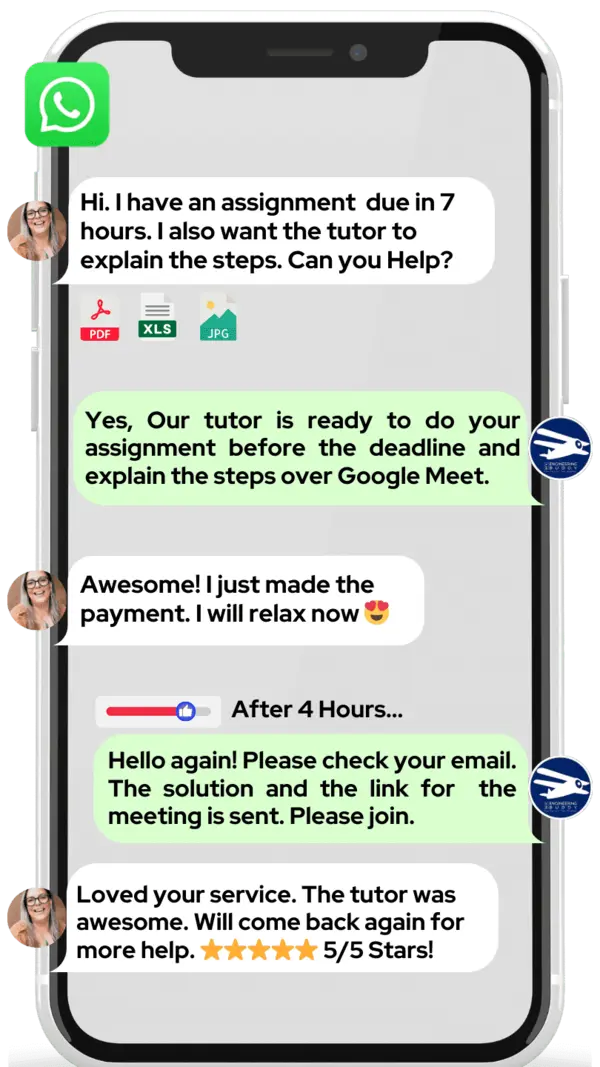



Hire The Best Mathematical Logic Tutor
Top Tutors, Top Grades. Without The Stress!
52,000+ Happy Students From Various Universities



How Much For Private 1:1 Tutoring & Hw Help?
Private 1:1 Tutoring and HW help Cost $20 – 35 per hour* on average.
Proof by contradiction. You’ve read it three times. You still can’t see why the assumption leads to a contradiction — and your assignment is due in 48 hours.
Mathematical Logic Tutor Online
Mathematical Logic is the formal study of proof systems, formal languages, propositional and predicate calculus, model theory, and computability. It equips students to construct rigorous mathematical arguments and reason precisely about mathematical structures.
If you’ve searched for a Mathematical Logic tutor near me, you’ve landed in the right place. MEB offers 1:1 online Mathematics tutoring — including expert Mathematical Logic tutoring — for undergraduate, graduate, and PhD students across the US, UK, Canada, Australia, and the Gulf. Your tutor works through your exact course topics, from propositional calculus to Gödel’s incompleteness theorems, correcting errors in real time.
- 1:1 online sessions tailored to your course syllabus and proof level
- Expert-verified tutors with subject-specific knowledge in formal logic and foundations
- Flexible time zones — US, UK, Canada, Australia, Gulf
- Structured learning plan built after a diagnostic session
- Ethical homework and assignment guidance — you understand the work before you submit
52,000+ students across the US, UK, Canada, Australia, and the Gulf have used MEB since 2008 — including students in Mathematics subjects like Mathematical Logic, Discrete Mathematics tutoring, and Set Theory help.
Source: My Engineering Buddy, 2008–2025.
How Much Does a Mathematical Logic Tutor Cost?
Most Mathematical Logic tutoring sessions run $20–$40/hr. Graduate-level and PhD-stream topics — model theory, proof theory, axiomatic set theory — can reach $70–$100/hr depending on tutor specialisation. The $1 trial gets you 30 minutes of live tutoring or one homework question explained in full.
| Level / Need | Typical Rate | What’s Included |
|---|---|---|
| Undergraduate (most levels) | $20–$40/hr | 1:1 sessions, homework guidance, proof walkthroughs |
| Graduate / PhD stream | $50–$100/hr | Model theory, proof theory, advanced axiomatic work |
| $1 Trial | $1 flat | 30 min live session or one full homework question |
Tutor availability tightens sharply during end-of-semester exam periods. Book early if your course finals or dissertation defence is approaching.
WhatsApp MEB for a quick quote — average response time under 1 minute.
Who This Mathematical Logic Tutoring Is For
Mathematical Logic sits at the intersection of mathematics, philosophy, and computer science. Students arrive from several different directions — and hit different walls.
- Undergraduate math or CS students encountering formal proof systems for the first time
- Philosophy students working through predicate logic, modal logic, or formal semantics
- Graduate students whose research touches on model theory, computability, or type theory
- Students retaking after a failed first attempt — often because the gap between intuitive and formal reasoning was never properly bridged
- Students with a coursework or take-home exam submission deadline approaching and specific proof gaps still open
- Parents watching a student’s confidence drop as abstract formalism replaces familiar calculation
Students from programmes at MIT, Stanford, Oxford, Cambridge, ETH Zürich, the University of Toronto, and the Australian National University have all worked with MEB tutors on Mathematical Logic coursework. The subject appears in math, CS, and philosophy departments — the tutor is matched to your department’s specific framing.
At MEB, we’ve found that students who struggle with Mathematical Logic most often aren’t weak at mathematics — they’ve simply never been shown how to switch from calculating answers to constructing arguments. That shift takes one or two targeted sessions to click, not a semester of re-reading the textbook.
1:1 Tutoring vs Self-Study vs AI vs YouTube vs Online Courses
Self-study: works if you’re disciplined, but Mathematical Logic proofs need immediate feedback — a flaw in your reasoning on line 3 makes lines 4–10 worthless, and you won’t always spot it alone. AI tools: can state definitions clearly, but struggle to diagnose exactly where your proof strategy breaks down. YouTube: useful for overviews of propositional logic or truth tables, but stops short the moment you’re stuck on a specific sequent calculus derivation. Online courses: structured, fixed pace, no one to tell you your universal quantifier scope is wrong. 1:1 tutoring with MEB: live, calibrated to your exact course and proof level, corrects logical errors in the moment before they become habits.
Outcomes: What You’ll Be Able To Do in Mathematical Logic
After working with an online Mathematical Logic tutor from MEB, you’ll be able to construct valid proofs using propositional and predicate calculus without prompting, apply the rules of natural deduction correctly across multi-step derivations, analyze the semantic validity of first-order sentences using model-theoretic methods, explain the significance and limitations of Gödel’s incompleteness theorems in non-circular terms, and write formal proofs that survive scrutiny from your course marker. These are not soft gains. They’re the difference between partial credit and full marks on a proof-based exam.
Based on feedback from 40,000+ sessions collected by MEB from 2022 to 2025, 58% of students improved by one full grade after approximately 20 hours of 1:1 tutoring in subjects like Mathematical Logic. A further 23% achieved at least a half-grade improvement.
Source: MEB session feedback data, 2022–2025.
Try your first session for $1 — 30 minutes of live 1:1 tutoring or one homework question explained in full. No registration. No commitment. WhatsApp MEB now and get matched within the hour.
What We Cover in Mathematical Logic (Syllabus / Topics)

Propositional and Predicate Logic
- Syntax and semantics of propositional calculus
- Truth tables, tautologies, and logical equivalences
- Natural deduction and Hilbert-style proof systems
- First-order predicate logic: quantifiers, variables, and scope
- Soundness and completeness of propositional and first-order systems
- Resolution and refutation proofs
- Normal forms: CNF, DNF, prenex normal form
Core texts: Logic and Structure by Dirk van Dalen; Mathematical Logic by H.-D. Ebbinghaus, J. Flum, and W. Thomas. Students working on propositional and predicate logic help will find this track directly relevant.
Model Theory and Proof Theory
- Structures, interpretations, and satisfaction
- The Löwenheim–Skolem theorems and their implications
- Compactness theorem and applications
- Gödel’s completeness theorem
- Gödel’s first and second incompleteness theorems
- Sequent calculus and the cut-elimination theorem
- Ordinal analysis and proof-theoretic strength
Core texts: Model Theory by Chang and Keisler; Proof Theory by Buss. Students also benefit from concurrent support in Abstract Algebra tutoring and Real Analysis tutoring when these appear alongside logic in their programme.
Computability and Formal Languages
- Turing machines and Church–Turing thesis
- Recursive and recursively enumerable sets
- Undecidability: the halting problem and Gödel coding
- Formal grammars, automata, and the Chomsky hierarchy
- Complexity classes and their logical characterisations
- Lambda calculus and type theory foundations
Core texts: Introduction to the Theory of Computation by Sipser; Computability and Logic by Boolos, Burgess, and Jeffrey. Students studying Computational Complexity tutoring frequently pair it with this track.
What a Typical Mathematical Logic Session Looks Like
The tutor opens by reviewing the previous topic — say, the student’s attempt at a completeness proof from last session. They identify exactly where the argument broke down: a missing case in the induction step, or a quantifier scope error that invalidated the whole construction. From there, the session moves into the current topic — perhaps natural deduction derivations or the construction of a countermodel for an invalid formula. The tutor works problems live on a digital pen-pad, talking through each inference rule as it’s applied. The student then replicates the structure on a new problem, with the tutor intervening only when a step is wrong — not before. The session closes with two or three practice derivations set for independent work, and the next topic — typically the completeness theorem or Löwenheim–Skolem — noted for next time.
How MEB Tutors Help You with Mathematical Logic (The Learning Loop)
Diagnose: In the first session, the tutor identifies exactly where your reasoning breaks. Is it the syntax of predicate logic? The mechanics of natural deduction? Or conceptual confusion about what completeness actually means? The diagnosis determines everything that follows.
Explain: The tutor works through a live proof on a digital pen-pad — step by step, rule by rule. Not a lecture. A worked example you watch being built, with commentary on why each move is valid.
Practice: You attempt the next problem with the tutor present. They don’t give answers. They watch your reasoning and intervene when a step is logically unsound — before the error propagates through the rest of the proof.
Feedback: Every error gets explained in terms of which rule was misapplied and why the resulting line doesn’t follow. This is where most self-study fails — mistakes get repeated because no one names them precisely.
Plan: After each session, the tutor notes which proof techniques are solid, which need one more pass, and what the next session should open with. Progress doesn’t drift.
Sessions run on Google Meet. The tutor uses a digital pen-pad or iPad with Apple Pencil for live proof writing. Before your first session, share your course syllabus or module outline, a recent proof attempt you struggled with, and your exam or assignment deadline. The first session covers your weakest area and sets the sequence for everything after. Start with the $1 trial — 30 minutes of live tutoring that also serves as your first diagnostic.
Students consistently tell us that the moment Mathematical Logic clicked was when a tutor showed them — live, on screen — exactly why their proof attempt failed at a specific inference step. Reading about soundness doesn’t do it. Watching a wrong move caught in real time does.
Source: My Engineering Buddy, 2008–2025.
Tutor Match Criteria (How We Pick Your Tutor)
Not every strong mathematician can teach Mathematical Logic well. The match depends on specifics.
Subject depth: Tutor holds a graduate degree in mathematics, logic, philosophy of mathematics, or theoretical computer science — with demonstrated coursework or research in formal proof systems. Tools: All sessions run on Google Meet with a digital pen-pad or iPad and Apple Pencil — live proof writing is non-negotiable for this subject. Time zone: matched to your region, whether you’re in the US, UK, Gulf, Canada, or Australia. Goals: whether you need to pass a single exam, close a specific proof gap, or build research-level fluency, the tutor is matched to that scope — not a generic “math tutor.”
Unlike platforms where you fill out a form and wait, MEB responds in under a minute, 24/7. Tutor match takes under an hour. The $1 trial means you test before you commit. Everything runs over WhatsApp — no logins, no intake forms.
Study Plans (Pick One That Matches Your Goal)
Catch-up (1–3 weeks): You’re behind on proof techniques and have an exam or assignment in under a month. Sessions focus on the highest-yield topics fast. Exam prep (4–8 weeks): Structured revision covering the full syllabus — propositional calculus, predicate logic, completeness, incompleteness, computability — with past paper practice built in. Weekly support: Ongoing sessions aligned to your semester schedule, covering each topic as it’s taught. The tutor maps the specific sequence after the first diagnostic session.
Pricing Guide
Mathematical Logic tutoring starts at $20/hr for standard undergraduate content. Graduate-level work — model theory, proof theory, type theory — runs $50–$100/hr depending on tutor specialisation and topic depth. Rate factors include your level, the complexity of the specific topic, your timeline, and tutor availability in your time zone.
Availability tightens in April–May and November–December when exam seasons peak across the US, UK, and Australia. Book before the rush.
For students targeting PhD programmes in mathematics, logic, or theoretical computer science at research universities, tutors with active research backgrounds in mathematical logic are available at higher rates — share your specific goal and MEB will match the tier to your ambition.
Start with the $1 trial — 30 minutes, no registration, no commitment. WhatsApp MEB for a quick quote.
FAQ
Is Mathematical Logic hard?
Yes, for most students. The difficulty is the shift from calculating to constructing arguments formally. Students who are strong at algebra or calculus often hit a wall here. The gap closes quickly with guided proof practice — usually within a few targeted sessions.
How many sessions are needed?
Most students working on a specific proof gap need 3–6 sessions. Full exam prep over a semester typically runs 10–20 sessions. The tutor scopes the plan after the first diagnostic — no fixed packages imposed.
Can you help with homework and assignments?
MEB tutoring is guided learning — you understand the work, then submit it yourself. The tutor walks through the reasoning, not the answer. See our Academic Integrity policy and Why MEB page for full details on what we help with and what we don’t.
Will the tutor match my exact syllabus or exam board?
Yes. Mathematical Logic appears differently across mathematics, philosophy, and CS departments — and across universities. You share your course outline or module guide before the first session and the tutor aligns to your specific coverage, not a generic syllabus.
What happens in the first session?
The tutor reviews a recent proof attempt or homework question you struggled with, identifies where your reasoning breaks down, and works through a corrected version live. The session ends with a clear plan for the next 3–5 sessions based on your exam date or assignment deadline.
Is online tutoring as effective as in-person?
For Mathematical Logic, yes — often more so. The tutor writes proofs live on a digital pen-pad shared on screen. You see every inference step constructed in real time. That’s clearer than watching someone write on a whiteboard at the front of a room.
Can you help with both the syntactic and semantic sides of logic?
Yes. Many students are comfortable with one and lost on the other. Tutors cover both: the formal proof system side — derivations, rules of inference, natural deduction — and the model-theoretic side — structures, satisfaction, validity, and countermodels. The diagnostic identifies which is the real gap.
Do you cover Gödel’s incompleteness theorems?
Yes. This is one of the most common specific requests MEB receives for Mathematical Logic. Tutors cover the construction in detail: arithmetisation of syntax, the diagonal lemma, the first incompleteness theorem, and the second. Both the proof and the philosophical implications are covered, depending on your course’s emphasis.
Can you help with logic in a theoretical computer science programme?
Yes. CS students encounter Mathematical Logic through computability theory, formal languages, type theory, and program verification. Tutors with theoretical CS backgrounds handle this framing directly — covering Turing machines, decidability, the halting problem, and lambda calculus as logic topics, not just CS ones.
Can I get Mathematical Logic help at midnight?
Yes. MEB operates 24/7 across time zones. WhatsApp MEB at any hour and the median response time is under one minute. Tutors span multiple time zones so late-night sessions are available for students in the US, UK, Gulf, Australia, and Canada.
How do I get started?
WhatsApp MEB with your course name, institution, and your hardest current topic. MEB matches you with a verified Mathematical Logic tutor — usually within an hour. The first session is the $1 trial: 30 minutes live or one full homework question explained step by step.
Trust & Quality at My Engineering Buddy
Every MEB tutor is screened before taking a single session. Screening includes credential verification, a live demo session assessed by a senior MEB reviewer, and subject-specific vetting — a Mathematical Logic tutor must demonstrate working knowledge of proof systems, model theory, and computability, not just general mathematics. Ongoing session feedback is reviewed and tutors who don’t hold standards are removed. Rated 4.8/5 across 40,000+ verified reviews on Google. MEB has served 52,000+ students since 2008 across the US, UK, Canada, Australia, the Gulf, and Europe.
MEB tutoring is guided learning — you understand the work, then submit it yourself. For full details on what we help with and what we don’t, read our Academic Integrity policy and Why MEB.
MEB covers 2,800+ subjects. Within Mathematics, the platform is particularly strong in advanced areas including Mathematical Logic, Pure Mathematics tutoring, Number Theory tutoring, and Mathematical Analysis help. Read more about how sessions are structured at MEB’s tutoring methodology.
MEB tutors for Mathematical Logic hold graduate degrees in mathematics, logic, or theoretical computer science. Subject vetting is specific — not just “can this person do maths?” but “can this person teach Gödel’s incompleteness proof to a second-year philosophy student?”
Source: My Engineering Buddy, 2008–2025.
Students consistently tell us that the biggest surprise about Mathematical Logic tutoring at MEB is how quickly the formal notation stops feeling like a foreign language. Two sessions in, most students are writing derivations they couldn’t have started the week before. The notation clicks because the tutor explains what it’s actually doing — not just how to copy it.
Our experience across thousands of sessions shows that Mathematical Logic students who bring a specific failed proof to the first session make faster progress than those who start with “I’m generally confused.” Come with the thing that broke. The tutor will fix it — and the fix teaches the underlying principle at the same time.
Explore Related Subjects
Students studying Mathematical Logic often also need support in:
- Logic Programming
- Logical Reasoning
- Computational Mathematics
- Graph Theory
- Combinatorics
- Topology
- Group Theory
Next Steps
Before your first session, have ready: your exam board and syllabus (or course outline), a recent proof attempt or homework question you struggled with, and your exam or assignment deadline. The tutor handles the rest.
- Share your course name, institution, and your hardest current topic
- Share your availability and time zone
- MEB matches you with a verified Mathematical Logic tutor — usually within 24 hours
The first session starts with a diagnostic so every minute is used well. Visit www.myengineeringbuddy.com for more on how MEB works.
WhatsApp to get started or email meb@myengineeringbuddy.com.
Reviewed by Subject Expert
This page has been carefully reviewed and validated by our subject expert to ensure accuracy and relevance.